
for use by DM’s with players who like to read everything
If you buy enough published roll-playing materials you’ll see something pop up again and again. Lots of adventures and setting/source books will have in-text “warnings” that say, things like, “this next section is for Game Masters only,” or “if your going to be a player in this adventure, don’t read any further.”
Arguably the later example, is the more important. Players shouldn’t read adventures that they want run for them. Or if they have read, or previously played through, an adventure that they are about to play in – those players should be up front with the person running the game about this and commit to working with he DM/GM to not ruining any of the adventure for the other players.
But unlike the example above, it can be less strait forward with how you deal with other “non-adventure” setting or source materials. Lots of “setting materials” are designated for both “Players” and “Dungeon Masters” in mind. This makes good sense for publishers who want to sell their books to as many people in the hobby as possible.
An excellent example of his is the “Midgard Worldbook,” by Kobold Press. It has things that are clearly the purview of both player and DM alike such as: cultural information of its various races and regions, information about its “gods,” an appendix containing its own 5e comparable features and spells for the game. It also has things we typical think as being the preview of only the DM such as: information about the “true alignments” and secret motivations of the various NPC characters; and, actual answers to some of the mysteries presented in the setting.
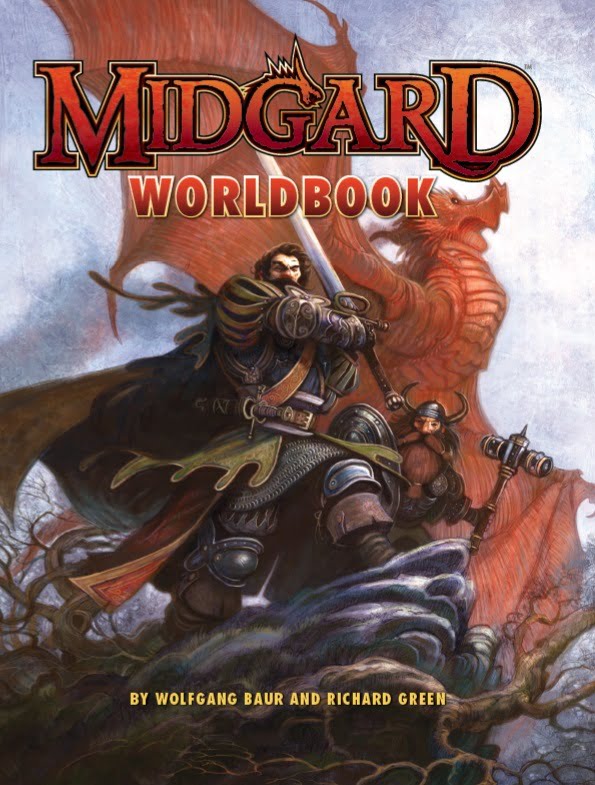
For Example: There is a large foot note section on page 293 the Midgard Worldbook, that explains the mystery of what has happened to The Imperatrix of Dornig (no spoilers here). To be honest, before I even saw that tid-bit of lore, I had already decided what had REALLY happened to the Imperatrix in my campaign, and it looked nothing like what your learn on page 293.
Note: You will be happy to know that my players did save and eventually did awake the Imperatrix from the “time-stasis” that her political rivals had thrust upon her, but not before she spent several weeks, in her time frozen state, and hidden within a coffin that was stored in the players bag of holding.
I didn’t (and would never) just hand the Worldbook to my players, saying something ridiculousness like “here is the setting document, read away!” No that’s to much especially for players who aren’t interested in that level of time investment. But occasionally you’ll get a player who just want’s to read EVERYTHING about the world. They may even want to read about those things that are outside the regions that your will be playing in. In such cases, I would argue that there is no reason to deny that player the thing that makes them happy. His enthusiasm is good for your game, so lend him the book, and let him read to his hearts content!
In my gaming group, I have one such player. After giving him access to my copy of The Worldbook he became better versed in the setting than I was!
This wasn’t a problem, but for one small issue. We all (no mater who we are) like to talk about the things that we like and share our knowledge on those subjects. Even if your player (like mine) doesn’t make a habit of regularly spilling the beans, information that you would prefer be kept secret can still come out at the table form time to time.
Game Masters have of course long had a solution to this issue – they change stuff!
This is nothing new, DM’s are constantly changing the contents of a local dungeon and “good” NPC’s always seem to have a habit of turning “EVIL” and betraying the players…
But this can create another (minor) problem. Although some of us like having our expectations subverted, especial in the context of a role-playing game, this is not true of everyone. Although your player(s) may not be intending to “abuse” their setting knowledge in the game, they still want to be able to “use” that knowledge.
That’s part of reason why they read the book! Again, they may not want to admit it, but players can find it very disappointing when you go and arbitrarily change the details of the world, that they invested so much time reading about.
This is ware my “Worldbook Rule” comes in. This is something that (ideally) you tell the player upfront, before handing them the source material.
The Worldbook Rule
Everything in the Worldbook (or other setting documents) such as: NPC alignments and motivations; secret plots; answers to mysteries; and generally anything presented as “factual” or “true” – is actually a mater of public perception, local legends, conventional wisdom, or tavern gossip.
or more succinctly
Anything written in that book, may be true, false, or somewhere in between.
This may seem like an early and all to convenient cop-out, but it has interesting implications for your game. For one it makes all knowledge that can be read from a setting book actual “knowledge” that charters could be aware of.
Your players can “know” that a local ruler is “upstanding and just” or “a corrupt scoundrel”, because that is what most of the local populous actually says about them.
Applying this to my example, above: The thing said about the The Imperatrix of Dornig on page 293 of the World Book, becomes an actual thing that people are saying. It was complete bunk in my adventure (a convenient lie spread about to distract from the truth). But its still “information” that is out there and it doesn’t spoil anything for the player to have read it.
I should reiterate that the best time to make your players aware of “The Worldbook Rule” is before they have invested time reading the setting materials.
What the Wordbook Rule does, is it gives those players that want to “read it all” the freedom to do so. But now they know ahead of time that what they are reading may not be the actual truth but only what is commonly believed. In this context, the player can still make use of EVERYTHING that they have read in the course of the game.
While it might still be a little be unreasonable your players characters to have the kind of extensive knowledge about that world that is in the Worldbook or a different campaign setting – it is perfectly reasonable for them to have an idea about the things local to them that “everyone knows.”
The down side of curse is that this puts the onus on the DM to go about changing things that he or she might not other wise change as part of implementing the rule. But this is not necessary. There is nothing wrong with letting the players know things about the world and, more than likely, the DM was always planing to change or invent things to fit with key features and story elements of their planed adventures.

 Jötunhiemr