
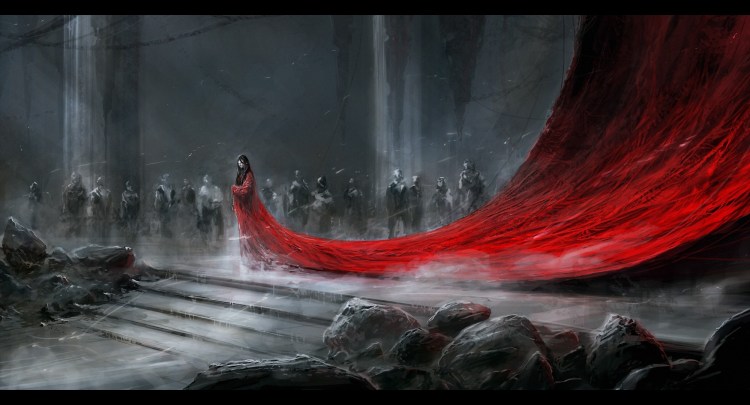
Allow me to introduce you to the Dark Kingdoms of Midgard. As you scroll down this page you’ll see six links describing various aspects of the setting. A good portion of the stories you will read about below are lifted directly from the pages of The Midgard Worldbook by Kobold Press. These are distinguished by quotation blocks. However this is “our” game and there is much that differs from how the world is presented in the Kobold’s printed products.
In a previous campaign that I ran, the heroes saved a neighboring kingdom from political chaos and civil war, and in doing so imprisoned a mad and murderous GOD, foiling the crazed plans of its cult to plunge the world into eternal darkness …
… but here in the Dark Kingdoms, EVIL forces have been in charge for a long time and the common people have become accustomed to the horror and casual predation that underpin their daily lives. For people so oppressed the surest protection and path to survival is quite capitulation, prudent measured collaboration, and not drawing undue attention to oneself. Resisting “The Masters” only incites their wraith. …
Chief among the Dark Kingdoms of Midgard is the Principality of Morgau and the Barony of Doresh. Fifteen years ago the armies of Lucan, the Vampire Prince, marched north and subjugated the Electoral Kingdom of Krakovia. Re-naming it the Duchy of Krakovar, Lucian has now proclaimed himself King of the “Greater Duchy of Morgau,” more commonly known today as “The Blood Kingdom.” It is here in occupied Krakovia, that we set our game.
Below you will find links to specific subject areas for the setting. The first three cover “The Blood Kingdom,” and the next three are cover outside forces in the world. Further down the page you will find a setting map and a bit of narrative history.
YOU DO NOT NEED TO READ ANY OF THIS STUFF TO PLAY IN THE GAME.

The Lay of the Land
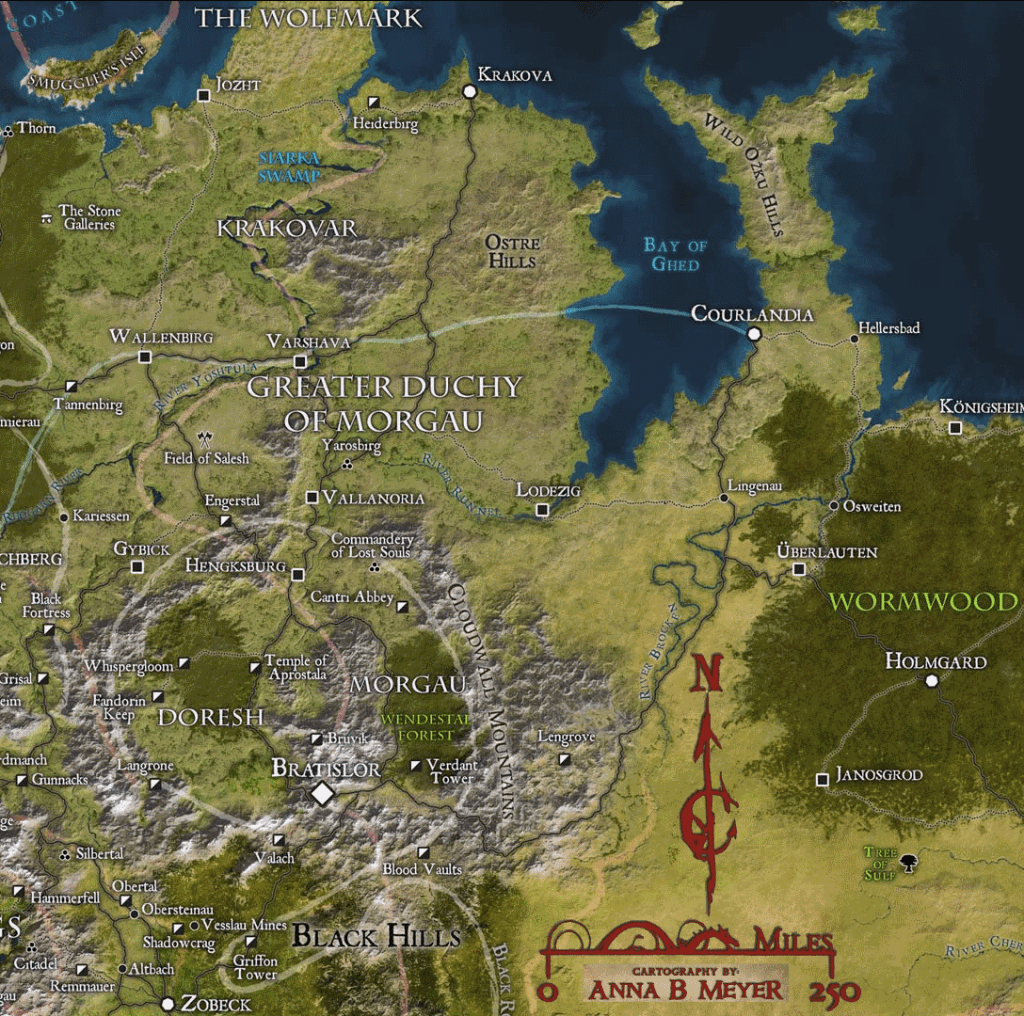
The good people at Kobold Press have been done a wonderful job of posting an online map of Midgard. You might find it a handy reference. Pictured below is the area That our campaign focuses on. In addition to the cities and places listed on the map, there are numerous small towns, villages and homesteads along all the roads and rivers.
A summary account of the conquest of Krakovia
An Unholy Alliance
~ an annotated except from the Midgard Worldbook By Kobold Press
King Lucan and Emperor Nicoforus the Pale have long maintained a pact of mutual aid between the Principalities of Morgau and Doresh and the Ghoul Imperium below the earth. Neither wishes the other to gain ascendancy, but it serves both kingdoms’ interests to stand together should an army of paladins and priests march against them.
In the last few years, the alliance between the vampires and the ghouls has grown stronger, much to the chagrin of their neighbors. … as detailed negotiations wore on … eventually a new, closer agreement was forged between the two nations.
No one [other than the undead rulers] is sure of the exact terms of the alliance … certainly [ghoulish] darakhul troops were involved in the siege and slaughter at each Krakovan city as it fell; those who surrendered were spared most of the looting and pillaging, but their cemeteries were despoiled.
Rise of the Blood Sisters
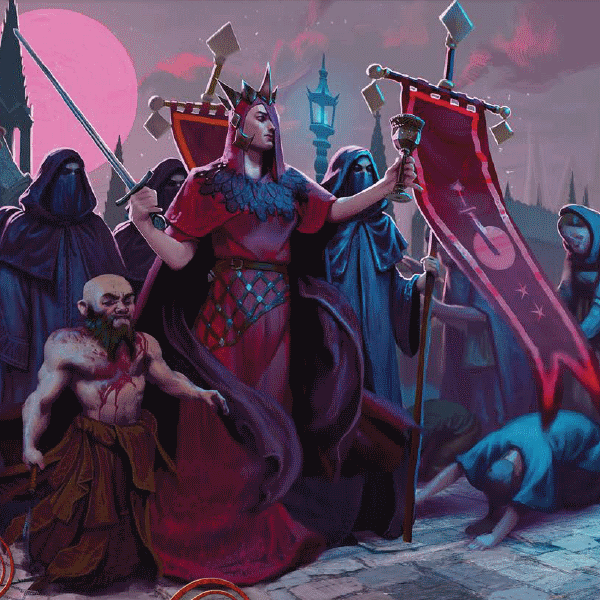
The crimson blood has been flowing freely on Marena’s altars in Morgau for three centuries, and the Red Goddess has been most pleased. However, a few [15] years ago her high priestess, Lileshka of the Chalice, Mother of Lust, began experiencing deeply disturbing visions in which the steady supply of fresh blood started to run dry and the Red Goddess’s power began to fade.
Fearing disaster, Lileshka demanded an audience with then-Prince Lucan and told him Marena yearned for more blood. She urged the First Prince to take up arms against his enemies and conquer new territory in the name of Morgau and the Red Goddess. Now was the time to deal with the treacherous Krakovans along the Principalities’ northern border and let their blood splash onto Marena’s altars. Lucan promised the high priestess he would consider her words carefully and bid her a respectful farewell.
With her visions becoming more vivid and frequent, Lileshka did not want to wait for war to start before taking action, so she summoned the Red Goddess’s other high-ranking priestesses to meet with her at the Temple of Aprostala. She ordered Blood Priestess Sonye of the Spear to ready the mayhem-loving warrior-priests of the Temple of the Scourging Goddess for battle should Prince Lucan decide to go to war. …
Fall of Krakova
With a military alliance secured with the Ghoul Imperium and troubled by Lileshka’s visions, Prince Lucan decided the time was right to strike against the Electoral Kingdom of Krakova and to seize its lands for the glory of Morgau and the Red Goddess.
The vampires had infiltrated the “mice”—the Krakovan spy network—several months earlier, and fed them false intelligence to throw them off guard. Then, just as the Ghost Knights of Morgau, joined by Blood Priestess Sonye’s warrior-priests of Marena and Mavros, attacked Yarosbirg Castle on the border under cover of darkness, a darakhul legion emerged from a tunnel beneath Tannenbirg Castle to the west. Neither fortress could support the other; indeed, they could not defend themselves.
The slaughter that followed was horrific—the ghouls poured out from below the earth in vast numbers, catching the Krakovans completely off guard and massacring them. As the darakhul fed on the dead, the Krakovan survivors fled north in terror. Yarosbirg fell the same night. Its defenders, though brave, were ill-equipped to deal with Ghostrider Templars on flying horses that could phase through castle walls.
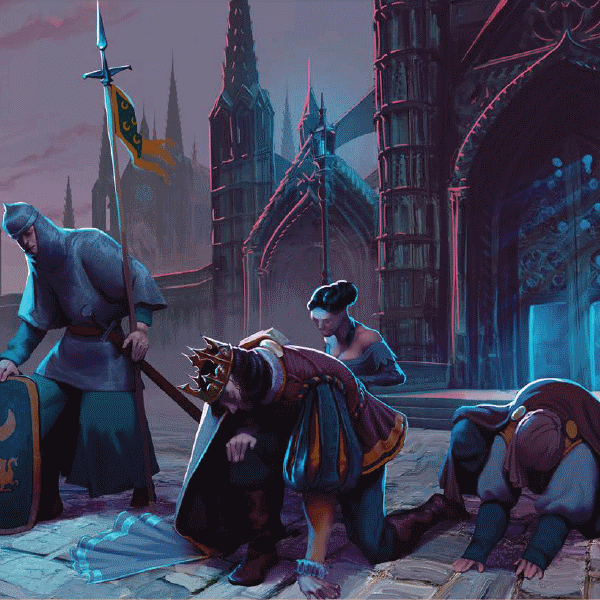
In the following weeks, the Ghost Knights pushed north to the city of Varshava, while the darakhul army marched northeast to Wallenbirg. Neither city held out for long. Then, just as King Eynryk was preparing to lead the Order of the Storm Knights from Heiderbirg Castle south to meet the invaders, he was assassinated in his throne room by a vampiric spy. Although the undead killer was swiftly slain, the king’s death was a bitter blow to Krakovan morale. Grand Marshall Jolenta Ludmiska led the army to confront the combined undead forces, but the Krakovan soldiers based on the coast were not used to facing unliving enemies, let alone at night. The armies of Morgau won a convincing victory on the battlefield, and Krakova, City of the Mermaid, surrendered a few days later to the Ghost Knights’ commander, Princess Hristina.

SITE NAVIGATION
Blog Site / Campaign Home Page
Setting & Lore / Scheduling & Play / Other Adventures
 Jötunhiemr