
With so many powerfull and dangerous enemies surrounding Lucan and his domain, you might be tempted to question how he has persisted in power for so long. The Blood Kingdoms survival has been no accident. Lucan has actively sought alliances ware he could find them and at times has resorted to costly measures to insure his victories.
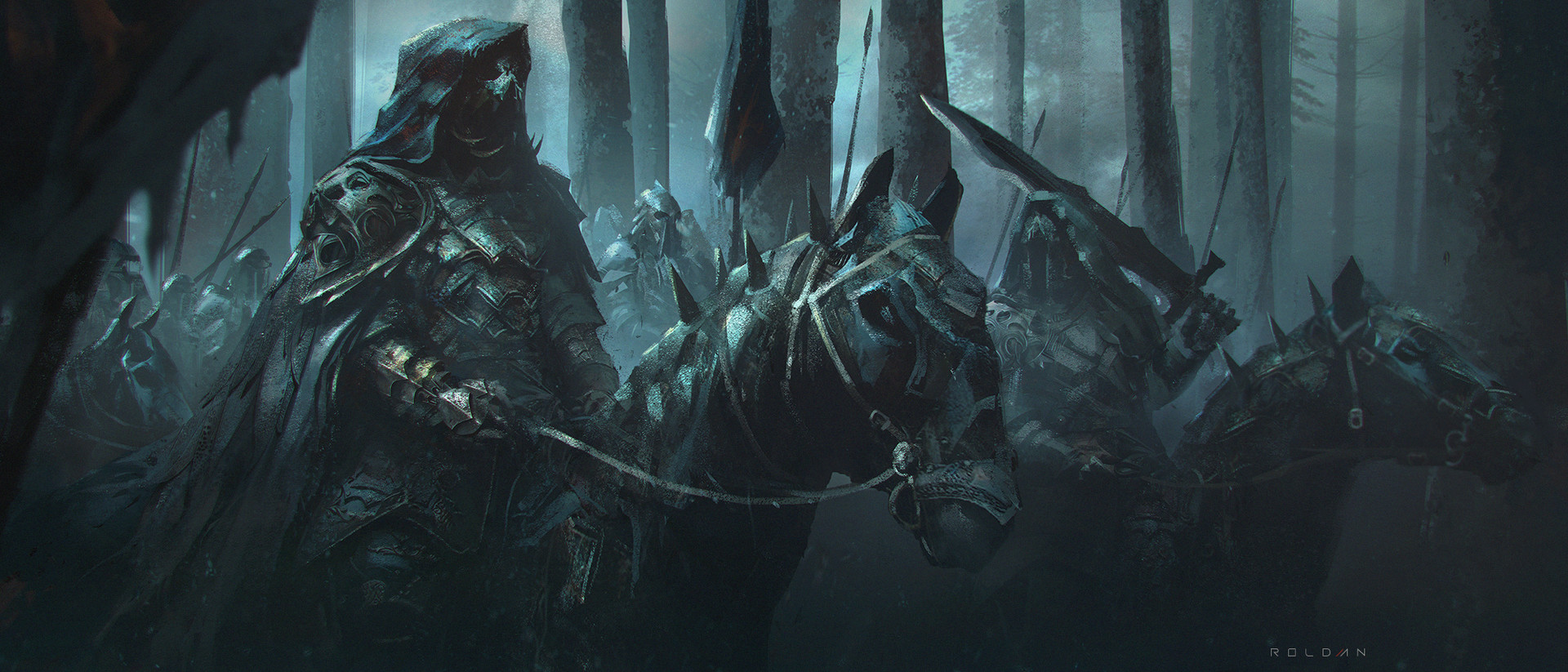
The Ghoul Imperium
Deep under the earth, stretching from below the Ironcrags, under the Margreve Forest, and as far north as southern Krakova lies a dark empire: the Ghoul Imperium, home to flesh-eating and blasphemous worshippers of the gods of death, hunger, and darkness, who come to the surface only to feed. Their empire rose more than 100 years ago with the first darakhul to answer a diabolist’s summons. Today, Emperor Nicoforus the Pale rules the lightless tunnels and vast chambers of the Ghoul Imperium from his palace in the center of Darakhan, the White City.
~ Midgard World Book by Kobold Press
Well hidden, the empire has bided its time, growing in strength, in knowledge, and in numbers. Speed and ferocity carried the darakhul to their first conquests. Cunning magic and ruthless rage have kept their empire together. Their emperor’s plan and his followers’ unwavering loyalty propel the empire ever forward.
The ghoul reign of conquest against dark elves, dwarves, svirfneblin, dark creepers, and other races of the underworld has not been an accident. The ghouls paralyze their foes, turning enemies into food or into replacements for their losses. Their armies include crawling bone colossi, demonic rams, bat-winged devices trailing fire and smoke, burning skeletons, liquid zombies, and tunneling undead purple worms. Ghouls are inventive soldiers, and they strike quickly: the lightly armored ghoul legions march 72 miles per day in small tunnels (and don’t rest by night), while the heavily armored legions still manage 48 miles per day through difficult tunnels. They either carry their provisions or march alongside them, when the provisions take the form of zombies. In frenzies, ghouls can strip a battlefield clean, down to cracking the bones of the fallen.
The only thing that had prevented the darakhul from swarming the surface world in the past was an aversion to sunlight. When Nicoforus and his Council of the Darakhul forged their alliance with Prince Lucan, such fears were set aside as the ghoulish legions marched into Krakova as part of the undead armies that laid waste to the Electoral Kingdom.
The Ghoul Imperium is the Blood Kingdom’s oldest ally (other than the priestesses of the Red Goddess). This alliance was first reviled to the world when, over 250 years ago, an attempt by outsiders to drive Lucan from the throne resulted in …
… a complete rout, with Morgau’s army killing (and devouring) the cream of Krakovan and Magdar nobility on the Field of Salesh.
~ Midgard World Book by Kobold Press

Whenever any of it’s enemies receive council or a petition to invade the Blood Kingdom, someone in the room always (wisely) reminds them of the Battle of Salesh.
FEAR, … fear of suffering a similar fate, more than any other factor, has prevented the Blood Kingdom from being overrun by its enemies.
However, the alliance with the Ghouls does not come cheep. The Ghouls require food, and the price (in flesh) paid by Lucan is reported to be exorbitant. The rumors that Lucain is seeking “new allies” may indicate that relations have cooled between the two unread nations …
The Ghoul Imperium
Important Persons:
- Emperor Nicoforus the Pale, and the Council of the Darakhul
- Duke Leander Stross, Ambassador of the Ghoul Imperium to Mourgau
- Rottziger the Ghastly, Exchange Officer of the Ghost Knights if Krakovia
Gods of the Ghouls: Vardesain (patron god), Anu-Akma, Chernovog, Mavros, Sarastra
Trade Goods: Alchemical supplies, beetles, (carrion and lamp), cloth, drugs, gold, necromantic supplies, poison, spider silks, slaves, undead servants, weapons and armor.

The Gnomes of the Wormwood
Some creatures of Midgard are gentle, loving, and brave. The gnomes of Niemheim are none of these things. They are servants of Hell.
~ Midgard World Book by Kobold Press
They were not always so. The gnomes lived among the people of Krakova for many years as friends and allies, teaching humans the arts of fey sorcery, weaving, and gardening. They were a kindly people, eager to discuss the finer points of pottery, alchemy, tanning, and the illumination of manuscripts. Their hats and noses were sources of mirth, but their wisdom was valued and respected.
Then, 200 years ago, a gnome prince betrayed a promise made to Baba Yaga. A blood oath of loyalty and service was foresworn. The prince died swiftly, but his people’s suffering was slow.
Ever since, it is said, Baba Yaga sought to use their beards for her pillow-stuffing. The gnomes suffered attacks by night-haunts, strigoi, … hags, and the psoglav demon-dogs—all servants of Baba Yaga. The gnomes lived in perpetual pants-wetting terror, knowing their children would be grist for Baba Yaga’s mortar, and their villages kindling for her fire and her hunting drakes. Village by village, the gnomes disappeared. Until one day, a devil of the Eleven Hells made the King of the Gnomes an offer. A very generous offer.
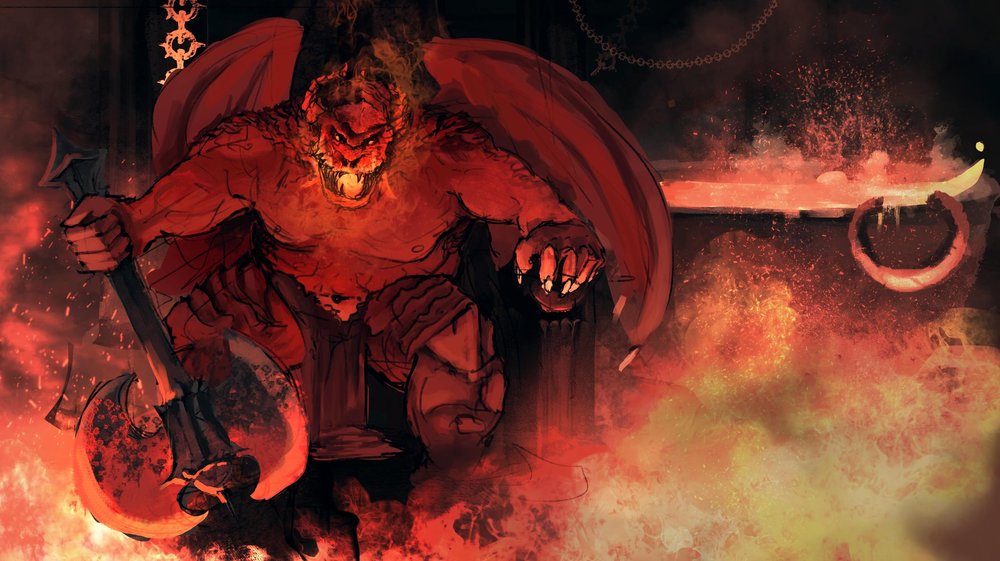
The devils offered to hide the Gnomes from Baba Yagas sight and set a guard of hell-spawn soldiers about their cities and within the Wormwood Forest. In exchange for this service the gnomes must provide a steady supply in sacrifice in souls and blood. Ever seance excepting this bargain gnomes have had an evil reputation among the peoples of Midgard and very few of those who visit to the Wormwood have ever returned.

In recent years the Gnomes have devised ways to leave the Wormwood. By tying live bits of their home forest (saplings, moss, or sprouts) to there caps and cloaks they can to avoid Baba Yaga’s scrying eye. But this method of travel provides no protection for he gnomes if she can find them by other means. At present the “infernal contract” only requires that devilish defenders be posted within the wormwood itself. Despite the risk, gnomes are beginning to appear again, here and their, within Krakovar and like their gracious Vampire hosts they appear to require blood.
Niemheim
Important Persons:
- King Redbeard, King of All the Gnomes, Defender Against the Heathen, Bringer of Plenty, Lord of All Lands and Manors, Grand Marshall of the Invincible Host, Ambassador-in-Plenipotentiary to the Eleven Havens
- Felpos Webcap, Ambasador of Niemheim to the Blood Kingdom
Gods of the Wormwood: Chernobog, Goat of the Woods, the Hunter, Mammon, Marena
Trade Goods: Mithral, pine, oak, beech, rosewood, woven wool, fine calfskin and leathers, amber, pear and cherry brandy, wormwood liquors
The Master of Demon Mountain

It hides its face behind wooded slopes. Its countenance is shrouded by the thick and unnatural clouds that roil around its peak and descend into nearby valleys. The barren hills at its base are filled with howling things that dance on cloven feet. Demon Mountain: a name known but never uttered. The daring souls who seek their fame on its unforgiving rises return with sulfur on their breath and madness in their eyes. The Master, they whisper, a palace of bone, wine, and the wicked. There are rumors of spies sent out from this unholy place. Women and men sent down from the mountain, walking the Plain and beyond—smiling toothily and always listening. More than one innocent has been set to death accused of being a witness for Demon Mountain. Even the great witch avoids both place and topic, though some believe she has a room in the storied palace of the Master.
~ Midgard World Book by Kobold Press
In truth, the Master of Demon Mountain is an expert demon binder who … has traded his freedom for knowledge; the palace that rose from the bones of the mountain in one night is his prison. He cannot not leave his palace. Instead, the ruler of the mountain recruits spies from abroad, granting them unnatural powers in exchange for their service. Through unions and affairs with infernals, the Master has fathered dozens of tiefling children, who he raises on the mountain before sending off to scour Midgard for a means to escape his lavish cell. Adventurers who brave the evils of the slopes and climb to its peak may be invited for dinner with the Master. Their fate after the dishes are cleared is anything but certain.
Despite never leaving Demon Mountain, “The Master” is said to command a power that rivals even that of the arch hag, Baba Yaga. While there is no “formal” alliance between Demon Mountains and the blood Kingdom it is well known that several of “The Master’s” tiefling children have served as occasional courtiers and companions of several Vampire Lords and ladies.
The Despotate of the Ruby Sea
The Despotate of the Ruby Sea is a curse among the free wandering folk of the Rothenian Plain …
~ Midgard World Book by Kobold Press
The Rubeshi are slavers and aggressive, malevolent folk, always seeking their own gain, and all other nations be damned. Their hair is black as their hearts, and Rubeshi eyes are green and pitiless. They sell to anyone: to the gnomes, the Tsar of Vidim, the priests of Baal. The Rubeshi do not play favorites.
… the
Despotate holds the peninsula in the sea that gives the nation its name, standing against infrequent attacks by centaur and Khazzaki hordes. Small in numbers, rich in gemstones and in vices, the Despotate is reviled by all its neighbors.
The Rubeshi care nothing for the disdain of their neighbors. Each summer, the people of the Despotate ride forth with their wagons, nets, and branding irons, to capture new slaves and workers for their fields, mines, and—worst of all—for the chained banks of oars that power the Despotate’s war galleys, … The Rubeshi call them bond servants, but to anyone with eyes to see, they are slaves and nothing more.
To truly call all the Ruby Despotate an “ally” of the Blood Kingdom would be an exaggeration. It would be more accurate to say that some among the Vampire nobility of Morgau are valued customers of the Despotate’s slave (flesh) trade.
In addition it is also commonly held that King Lucan was himself Rubeshi by birth and he is known to have the emblematic black hair and green eyes of that people. This may be a slander against him made by the rulers of rival nations, frequently this accusation is followed by the insinuation that Lucan himself was once a slave. Most historians will point out that while Lucan may be Rubeshi, he is himself older than the Despotate. This point is sometimes countered with the fact that the practice of slaving is also older than the Despotate. Within the Blood Kingdom all that maters is that Lucan is King.
The Ruby Despotate
Important Persons:
- Veltrin the Glittering King, Admiral and Despot, Master of the Ruby Sea; and,
- Xanzam’Ar, Bandmaster and Chief Sales Representative of the Despotate to Morgau
Great Gods of the Despotate: Chernobog, Mavros, Marena, Svarog, the White Goddess
Trade Goods: Slaves, horses, amber, furs, mead, gemstones

The Wandering Karav
The Kariv are the “gypsies” of the Midgard setting. They are constantly wandering and rarely stay in one pace for more than a month. For this reason (and for others) they are viewed with suspicion by the more settled peoples of the world. Many say that they are cursed though the nature of this curse (if it even exists) varies from one story to the next.
One thing many observes have noticed, is that while the Kariv don’t often travel into Lucan’s Lands, those that do have no fear of doing so. They appear to be able to come and go within the blood kingdom with a freedom that no others have. What agreement they have made with Lucan and his kin is not known outside their own encampments.


SITE NAVIGATION
Blog Site / Campaign Home Page
Setting & Lore / Scheduling & Play / Other Adventures
 Jötunhiemr