
The “central tension” of this setting revolves around the udead occupation of Krakovar and its future outcome. We could sum this up as “the Living vs. the Dead” and while this does have value there are other forces at play.
Law vs. Chaos
The ruling class brings stability to the land, or at least that’s what they say. The Vampire overlords are unquestionably EVIL and many of them rule with no concern for anything other than their own power and gratification.
But if the vampires are overthrown, what or who will replace them? For some the shroud eaters appear better than the alternative, CHAOS and anarchy.
Class Struggle: Commoners vs. Nobles

Commoners
Commoners (specifically human commoners) make up the vast majority of the population in Krakovar. They also make up the majority of people within Morgau & Doresh though those they are surprisingly more diverse having a number of other “civilized” races, both living and dead. Commoners are divided into the following groups:
- Slaves: “True slaves” are relatively few in Krakovar, but most of the High Vampire lords keep a small stable of them. Slaves have no rights in the Blood Kingdom.
- Serfs: Well over half the human populations of Krakovar and the Blood Kingdom are land bound serfs or “villains.” They generally have more rights than slaves but they are bound to the land and not at liberty to travel as they please. They are required to provide service to the noble who owns the lands at which they reside and though the nature and terms of this service can vary according to local traditions, it usually induces a requirement to plant and harvest the nobleman’s fields in addition to those fields provided for the serfs own use.
- Free Men: Free men are not bound to the land and and may move about as they please. Most of these live as merchants or craftsmen. They may own land but only by special warrant. In the Former Electoral Kingdom they could be elevated to the Slahta if they also provide sufficient service to the Kingdom.
The Nobility
The Great Vampire Lords: Each of the great Vampire Lords represents a faction unto themselves and the intrigues they engage in against one another can be bitter and deadly, especially for their subordinates. Their feuding is tempered only by the “Tree of Chains” that keeps them loyal to Lucan.
The Lesser Nobility: In Morgau and Doresh no living person can claim a noble rank, they are all Vampires. But in present day Krakovar the situation is more complicated.
Most of the land holding nobility in Krakovar are members of the Slahta who were able to keep their lives and their land holdings (or pass them on to their heirs) by rendering oaths of allegiance and fidelity to the Vampire invaders. This change in loyalty has given rise to many a commoner (secretly) referring to their rulers not as “Slahta” but as “Sluts.”
There are thousands of these “Slahta”, some great and some very small. By Krakovan tradition, all that is required to claim the status of Slatha is 1.) land ownership, 2.) service (usual military), 3.) marriage, and most importantly 4.) recognition by and fidelity to the provincial ruler-ship.
If a member of the Slahta should die without a legal heir his land holdings may be disposed of at the pleasure of the King. In recent years the war and its ravages had brought many a noble house low, allowing land grants to be parceled out to lower ranking vampires. This has led in to a patchwork distribution across Kravovar of lands held by human Slahta and Vampire patricians
Notable Organizations
The Blood Sisters: Priestesses of the Red Goddess
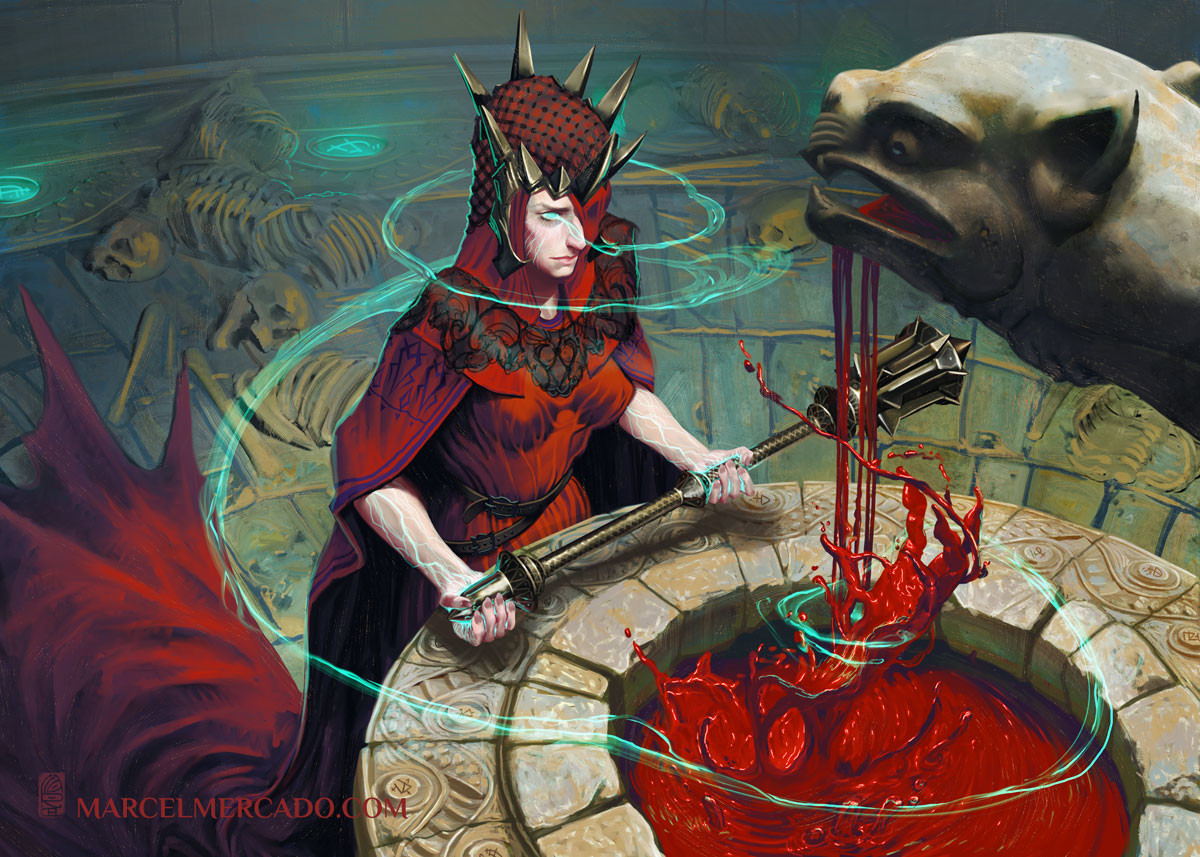
Following Lucan’s usurpation, veneration of the Red Goddess Marena spread throughout the Principalities [Mourgau & Doresh]. All the nobles took up her worship, though some retained their fondness for St. Charon or the Red Goddess’s husband Mavros, the War God. In time, the common people embraced her, whether they feared her aspect as the goddess of death and respected or leered over her aspect as a goddess of lust and fertility.
The cities and villages of the Greater Duchy are now devoted to the Red Goddess, with all other deities second to her in importance. Worship is frequent and public; offerings are loud and messy. Every village of any size contains at least a small blood-stained altar stone, and her name is invoked at every birth, funeral, and battle. Marena’s main temples include the Temple of the Scourging Goddess in Vallanoria, where Marena’s cult of slaughter worships death and mayhem; Cantri Abbey in the Cloudwall Mountains, where the matronly Mother Abbess Calle protects pregnant women; and the Temple of Aprostala on the edge of the Walkers’ Wood, where the altar runs red with daily sacrifices. At these temples reside Marena’s greatest zealots, the Flagellants of the Red Goddess, also known as the Order of the Rosy Salvation.
The Grey Knights: The Grey knights are an order dedicated to worship of of the war God Movros they are closely associated with the priestesses of the Red Goddess. The Grey Knights are technically a branch of the Order ofK Knights Incorporeal (below) but unlike the “Ghost Knights” they’re typically not undead and their loyalty is first and foremost to the gods Mavros and Marena and only secondarily to the Vampire aristocracy.
Order of the Knights Incorporeal (Ghost Knights)

The Ghost Knights of Morgau rise from interesting origins: Many of them were living creatures who chose to join the ranks of the undead as a method of advancement. The knights enter the order as living men and women, bound to the service of a vampire, darakhul necromancer, or priestess of Marena. If they provide good service for 5 or 10 years, they might be “raised up” into the ranks of the undead …
If they provide additional good service and make the transition through ghoul fever or vampiric bite without undue madness or blood frenzy, they may slowly advance through the grades of the Order of the Red Shield. These ranks are Initiate Brother/Sister, Honest Brother/Sister, Master of Arms, Captain of Arms, General at Arms, Commander, and Grand Marshall.
In recent years there have been some humans who have risen higher in the Ghost Knights than is traditional for a living person. This is usually a reward for outstanding service coupled with newer directives from the crown (see below). Some of the Vampire nobility have expressed a distaste for this liberalizing trend. But there may also be some practical reasons such as the need for a human to command the admiralty.
Guilds of Note
The Blood Kingdom has a well developed system of merchant and artisan guilds. Guilds are especially common within cities and memberships are highly sought after. Most guilds have a Vampire patron thus providing its members and their families an added layer of protection, from other vampires. There are many guilds both small and large. and the following are only prominent examples:
- The k’Vass And Vintner Association (Merchants and Brewers)
- The Black Brewers (Potion Makers and Alchemists)
- The Honorable Association of Flesh Mongers (Merchants)
- The Blade Wrights of Bratislor (Smiths)
- The Broadsheets Guild (Printers and Publishers)
The Blood Mint
Formerly an ordinary guild like those listed above, the role of the Blood Mint has greatly expanded in the last five years. They still function as money lenders to the lower classes, doling our small “cash grants” in exchange for the promise of future blood. But now they have been entrusted by the crown with reporting on and managing the entire hemoglobinic economy of the kingdom. The regional governors are still the primary tax collectors, in gold and blood throughout the kingdom however they are now subject to troublesome interference from the Blood Mint.

Variant Background: Blood Guild. Use the Guild Merchant background but replace the Insight skill proficiency with Investigation.
Cults and Spy Networks
There are numerous “subversive cults” throughout the Blood Kingdom and every one of the high nobles has his or her own stable of spies, informants, and “fixers”. But if any of these were common knowledge someone would come and stamp them out so for the most part they remain secret.
Racial Tensions
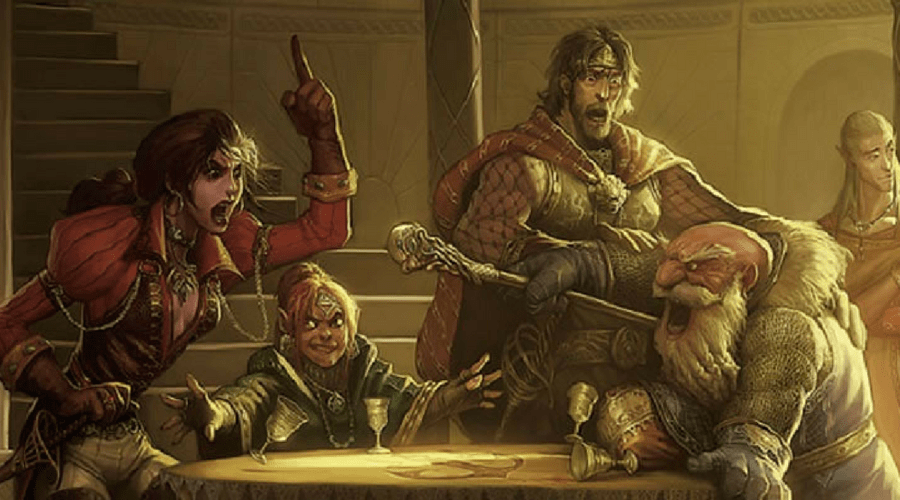
Despite the undead hegemony that currently reins, Krakovar and the Blood Kingdoms are a Human eccentric society and culture. Other races are present but are usually viewed as outsiders not to be trusted.
Human Adventurers: are generally a cut above ordinary farmers and merchants. When creating a Human character players should use the “Standard Human” adding +1 to all ability scores, and they may also take a free feat at 1st level.
(They do not get a free skill, as in the “Alternate Human”)
There are however a few other races of note that make their home in the Blood Kingdoms. All of the following are excellent choices for players who don’t want to play a human.
Darakhul: Most ghouls live under the earth in the Ghoul Imperium. But there are a number of them that live on the surface. Most of these were people who were bitten by a ghoul and survived the ghoul fever, coming out the other side transformed but with most of their intelligence and personality still intact. These are the Darahkul.
Dhampir: Though not especially numerous, half-vampires are a thing. The mortality rate of such births is substantially higher for both mother and child and so most Dhampir have never met their mothers. Some Vampire lords cultivate their half noble children, others have them quietly raised out of sight, and some just abandon them. There are no known Dhampir with a vampire mother and mortal father.
Goblinoids: There are numerous goblin communities in the Barony of Doresh and as a consequence they can be found in Morgau and now in Krakovar as well. Although they don’t always get along well with humans, Doreshi goblins are more civilized than others of their kind that live outside the Blood Kingdoms. Bugbears and Hobgoblins are also present in Doresh, usually in service to the Barron and Barrenness of Doresh.
In addition, there are: Firbolg communities in the Margrave Forest to the south; Goliath tribes in the Cloudwall Mountains; Gearforged from Zobeck are rare but not unheard of; and, Gnomes from the Wormwood have recently been allowed back within Krakovar.
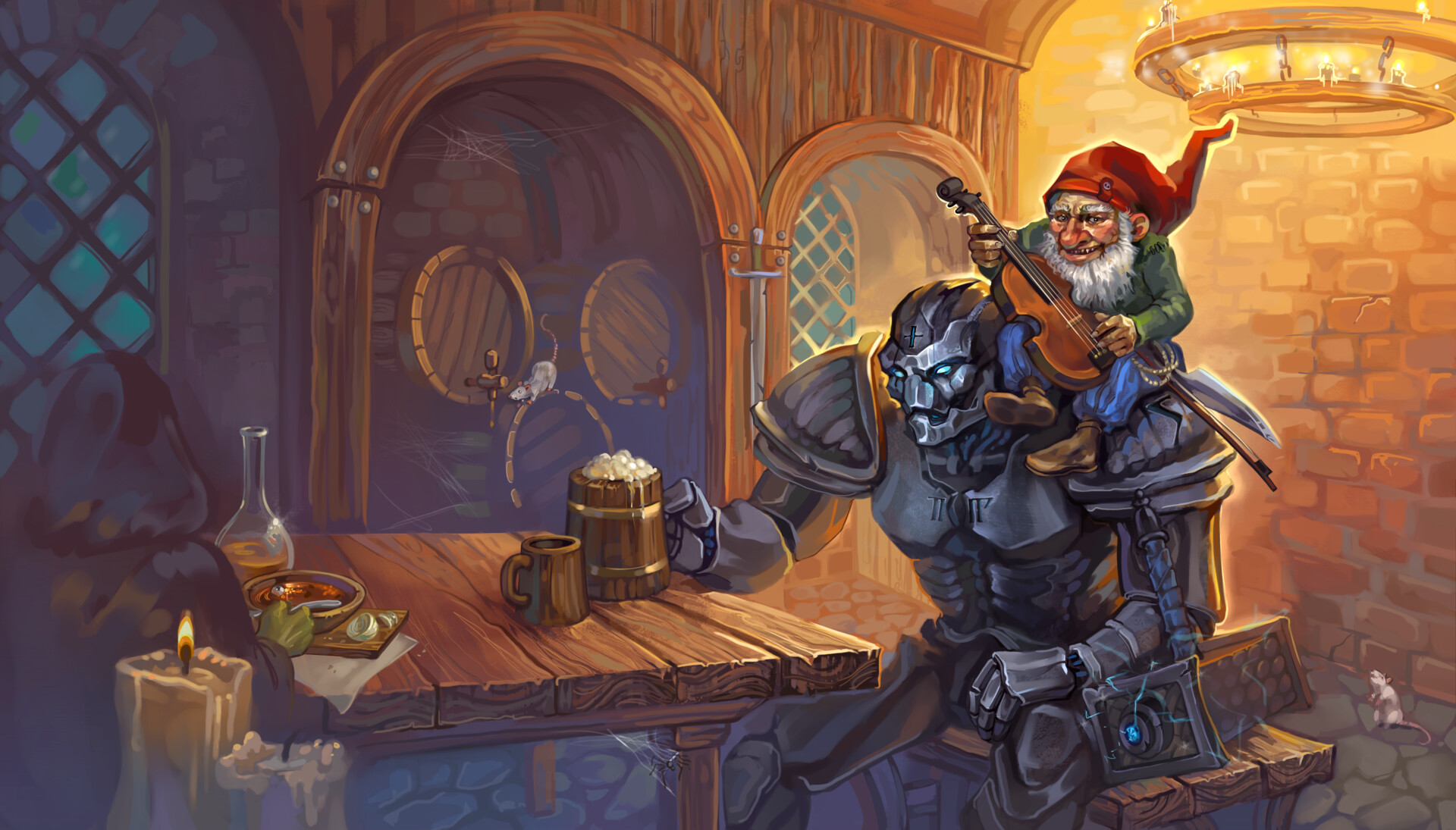
NOTE: Players are allowed to play most any race they want, however they should speak with the DM before doing so. There are some races that are not advisable in this setting such as Elves, Dwarves, or exotic races like Assimar or Genasi.

SITE NAVIGATION
Blog Site / Campaign Home Page
Setting & Lore / Scheduling & Play / Other Adventures
 Jötunhiemr