
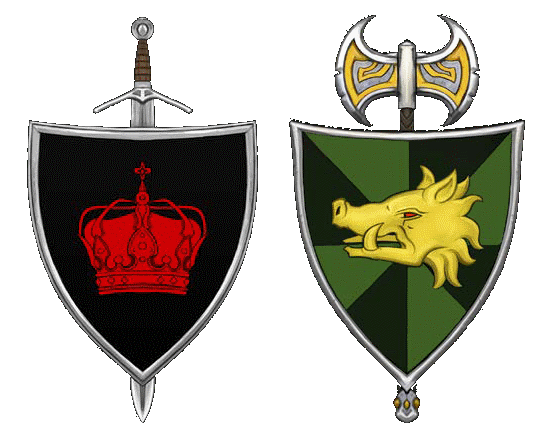
Morgau and Doresh are located on a forested highland known as the Brom Plateau which lies between the Ironcrags to the west and the Cloudwall Mountains to the east. To the south stands the dense and ancient Margreve Forest; the vast Rothenian Plain extends as far as the eye can see to the east beyond the Cloudwalls. The fast-flowing and icy River Runnel divides Doresh on the western side of the plateau from Morgau to the east, before heading north and east into Krakovar and meeting the sea at Lodezig. Too narrow for boat traffic, the river teems with trout and perch. The lands of the Principalities are richly fertile—although the fields are small, they yield abundant crops, the vineyards produce excellent red wines, and the woods are full of deer and boar, providing plentiful hunting. Throughout both Morgau and Doresh, the misty landscape is dotted with small villages, crumbling ruins, and the keeps and manors of the vampiric nobility.
~ Midgard Worldbook By Kobold Press
Overview
Ruler: King Lucan
Provincial Rulers:
- Prince Thurso Dragonson, Duke of Morgau;
- Lord Fandorin, Baron of Doresh, Fey Lord of the Grisal Marches;
- Lady Mihaela, Baroness of Doresh, Pale Lady of Fandorin;
- Princess Hristina, Protector and Duchess of Krakovar, Grand Marshall of the Ghost
Prominent Nobles:
- Baron Urslav, the Crawling Lord of Vallanoria, Keeper of the Red Sisters;
- Lord Mayor Rodyan, the Glutton of Hengksburg;
- Countess Urzana Dolingen of Morgau
Military Commanders:
- Commander Baleneus, Defender General of Morgau
- Commander Orkov, Defender General of Doresh
Blood Sisters:
- High Priestess Lileshka of the Chalice, Mother of Lust (Human)
- Blood Priestess Sonye of the Spear, Wife to Slaughter (Human-ish)
- Mother Abbess Calle of the Cradle, Daughter of Marena’s Brood (Human)
Other Person of Note:
- Gospodar Xanthus the Flenser, Priest of Chernobog (Human)
- Lady Chesmaya, Voivodina of the Verdant Tower (Litch)
Gods of Morgau: Marena, Mavros, Vardesain, St. Charon, the Hunter, Chernobog
Trade Goods: Necromantic goods, lumber (pine, oak, maple, beech, yew), pelts, requiem and other drugs.
Lucan – The First Shroud Eater

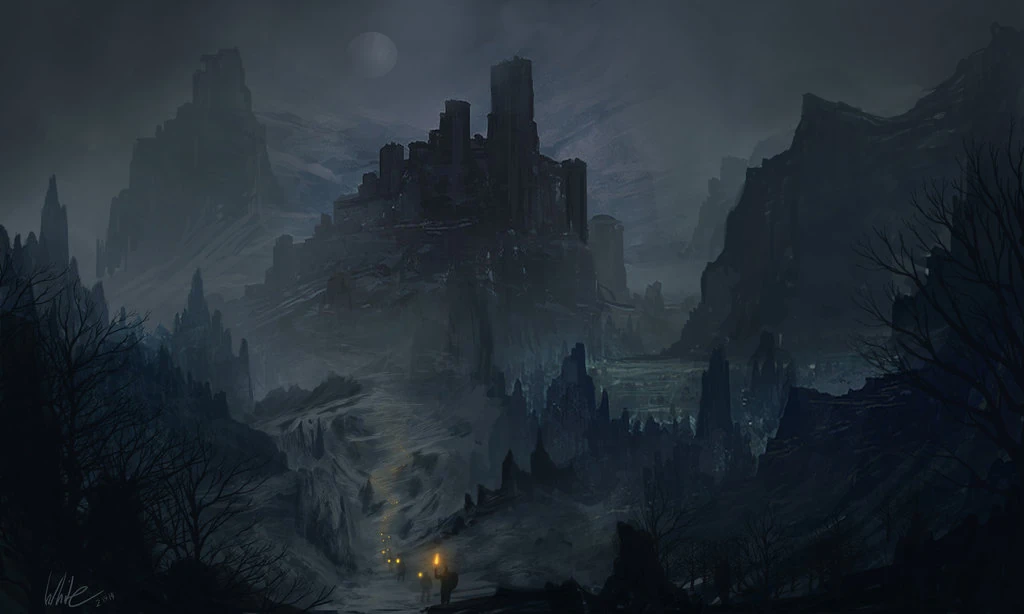
At the center of the Blood Kingdom is Lucan. He is a mystery to the outside world. For most of his reign he went by the title of “Prince” and now “King,” since the conquest of Krakovaia, Most assume that his “nobility” is of his own making. But the truth of Lucan’s history and family lineage is a closely guarded state secret and even the most powerful divination magic has not been able to reveal his origins.
While maintaining a public face that is accessible to diplomatic visitors, he keeps all but a very select few at several (and sometimes severed) arms length. Most of the time he can be found in the capital of Bratislor, but he has been known to discreetly travel throughout his realm.
The lesser vampire nobles can and do scheme and plot to undermine one another. But none may defy Lucan, or otherwise cause harm to him. Lucan stands at the center of a great “Tree of Chains” that controls the vampire nobility of his kingdom. Through the vampire bloodline that extends outward from himself Lucan can and does command all those vampires he has “sired” and all those they have “sired,” and on and on. The obedience and loyalty tenured by these “chains” is stronger and more secure than any mere “oath of fealty” held by other rulers.
All the provisional rulers and the most predominant vampire nobles (listed above) in his kingdom were directly “sired” into the nobility by Lucan and they all have vampires beneath them whom they have “raised to nobility.” Lucan has also “sired” many others who hold lesser or more humble rank.
Although most nobles within the kingdom can claim Lucan as either their “sire,” “grand-sire,” “great grand-sire,” or “great great grand-sire” … there are however a few who have been raised to their position through service, ability, demonstrated loyalty, or there own power. Most of these are either drakoul (“civilized ghouls”) or other intelligent unread such as Lady Chesmaya the Litch.
In addition to those who claim “vampiric lineage” from Luican there are also two high nobles in the Kingdom who claim the title of “Twice Sired.” These are Prince Thurso and Princess Hristina. Although it has never been confirmed by the kingdom, the assumed implication of this title is that they are also the natural born children of Lucan from before he became a vampire. Several observers have also noticed that Baron Urslav appears to also bear a family-like appearance.
The Principality of Morgau
Bratislor, The Capital City
Situated in the shadow of the towering Heartspire on the main road to the east, close to the junction with the Great Northern Road, Bratislor is the capital of both the Duchy of Morgau and the whole Blood Kingdom. Surrounded by the most fertile fields and pastures in central Morgau, the city’s coat of arms depicts a black castle atop a gold crown on a purple field, with a silver crescent moon above its battlements.
~ Midgard Worldbook by Kobold Press
Bratislor is a grim city of gray walls, dominated by the imposing edifice of Bratis Castle perched atop a crag in the center of the city. Home to King Lucan, the castle is entirely the domain of the undead; no living knights or servants are permitted within. Skeletons serve the keep and a company of darakhul and imperial ghouls guards its walls. The king holds court at the castle at the Summer and Winter Solstices and all the Elders and their spawn are expected to present themselves. …
These festivals are a time of fear for the mortals of Bratislor; each solstice 100 living citizens are invited to attend the King’s Feast. Afterward, only one “lucky” individual returns to the city’s cobbled streets, his or her eyes and tongue gouged out and mind shattered by having heard the words of the Elders and their plans for the realm for the coming season.
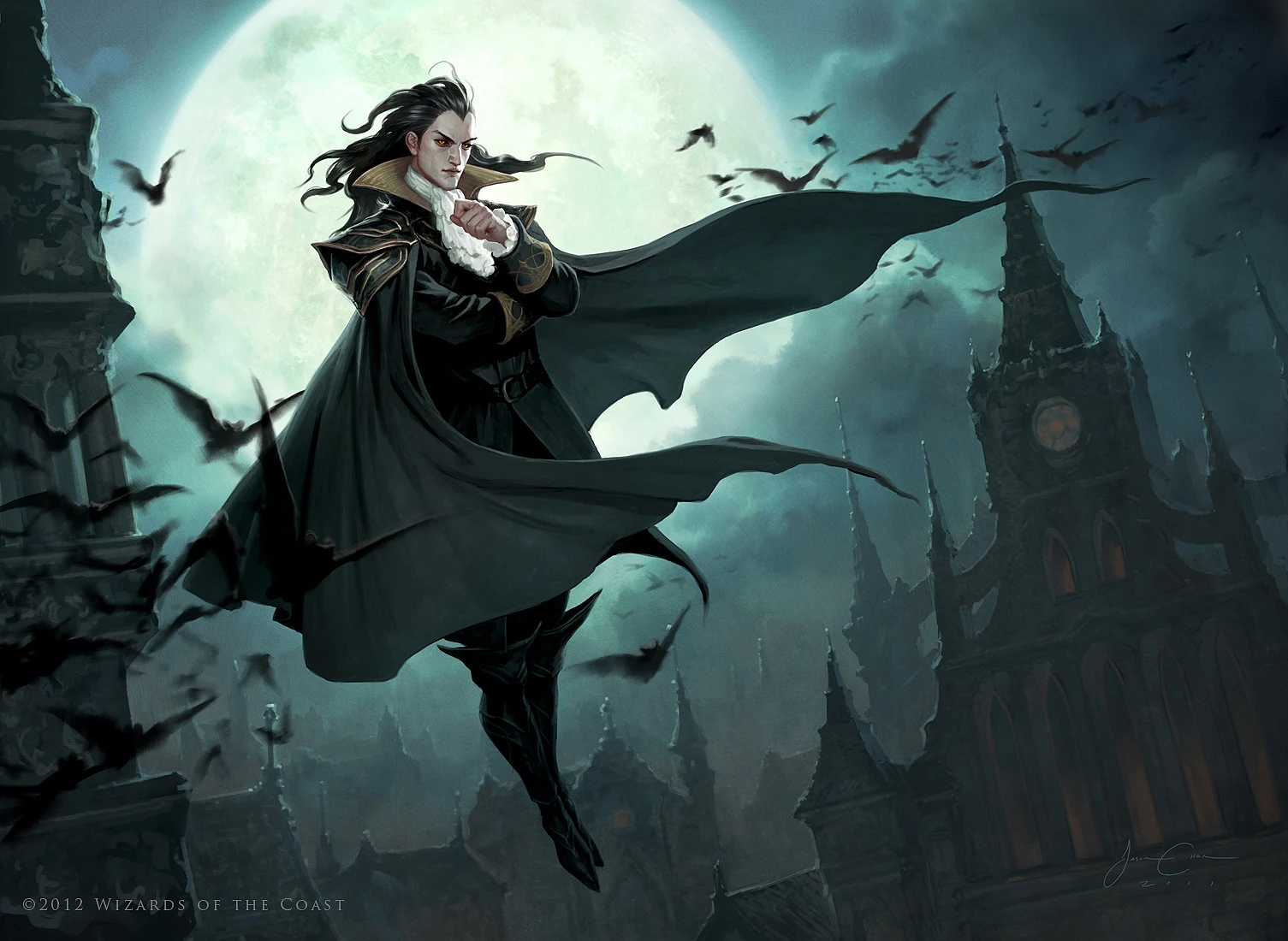
The Duke of Morgau—Thurso Dragonson, Master of the Black Hills, Protector of the Fane of the Blood— governs one-third of the Blood Kingdom on behalf of King Lucan and lives in considerable luxury in the city’s Heartspire Palace. Nominally heir to the throne of the kingdom, Duke Thurso’s hold on power is precarious—he depends on both the support of his barons and the king’s favor. He lives in alternating fear and arrogance, depending on his degree of confidence at any given time. Five years ago, the scheming Countess Urzana Dolingen attempted to topple him in a coup, fleeing to the Ironcrags when it failed. Now back in favor with King Lucan after brokering the pact with the Ghoul Imperium, the Countess has her sights set on the Duchy again and has begun a whispering campaign against Dragonson.
~ Midgard Worldbook by Kobold Press

Duke Thurso is not one to ignore these attempts to undermine his position, and he relies on the support of his sister, Princess Hristina, at court. She has taken on the mantle of Protector of Krakovar in addition to her role as Grand Marshall of the Ghost Knights, and her star is very much in the ascendant. Some believe she wishes to claim the mantle of heir for herself, but none whisper this anywhere near Duke Thurso.
~ Midgard Worldbook by Kobold Press
Many famed poets live in the city, and bards often visit during the Poet’s Festival in the spring held at the duke’s behest. Thurso is an enthusiastic patron of the arts and has been known to shower talented artists and performers with gold and silver. A select few who particularly impressed him have even been rewarded with the gift of eternal life and subsequent entry into the vampiric ruling class. However, a grisly fate awaits those who displease the duke with crude doggerel or biting satire: impaled on stakes at Poet’s Corner, their screams often last until sunrise.
Commander Baleneus, of the Knights Incorporeal oversees the vital commanderies along the Great Northern Road through Morgau where tolls are collected. His jurisdiction includes the Commanderies of Valach, Bruvik, and Engerstal, and Cantri Abbey in the Cloudwall Mountains. However he rarely administers these directly, preferring instead to delegate so he may command from his luxurious estates in Bratislor.

Hengksburg
Hengksburg is the most stable and secure city in the Greater Duchy. It thrives on the vile trade in flesh and blood, buying captives seized in raids and selling them at its Meat Market to the dukes, barons, and other nobles who desire them. A safe distance from the conquered territories to the north and the borders with Morgau’s enemies, the main trade center of the realm is always bustling and free of major disruptions. Trade must flow, tolls must be paid, and most of that profit winds up here.
~ Midgard Worldbook by Kobold Press
Unsurprisingly, the cult of Mammon has a visible presence here, though without a temple to call its own. While the archdevil’s priests are free to walk the streets openly as long as they make their obeisance to the Lord Mayor, Hengksburg’s richest merchants, grown fat on the profits of the flesh trade, keep a low profile, disguising their wealth and eschewing ostentatious clothes for fear of the city’s remorseless tax collectors.
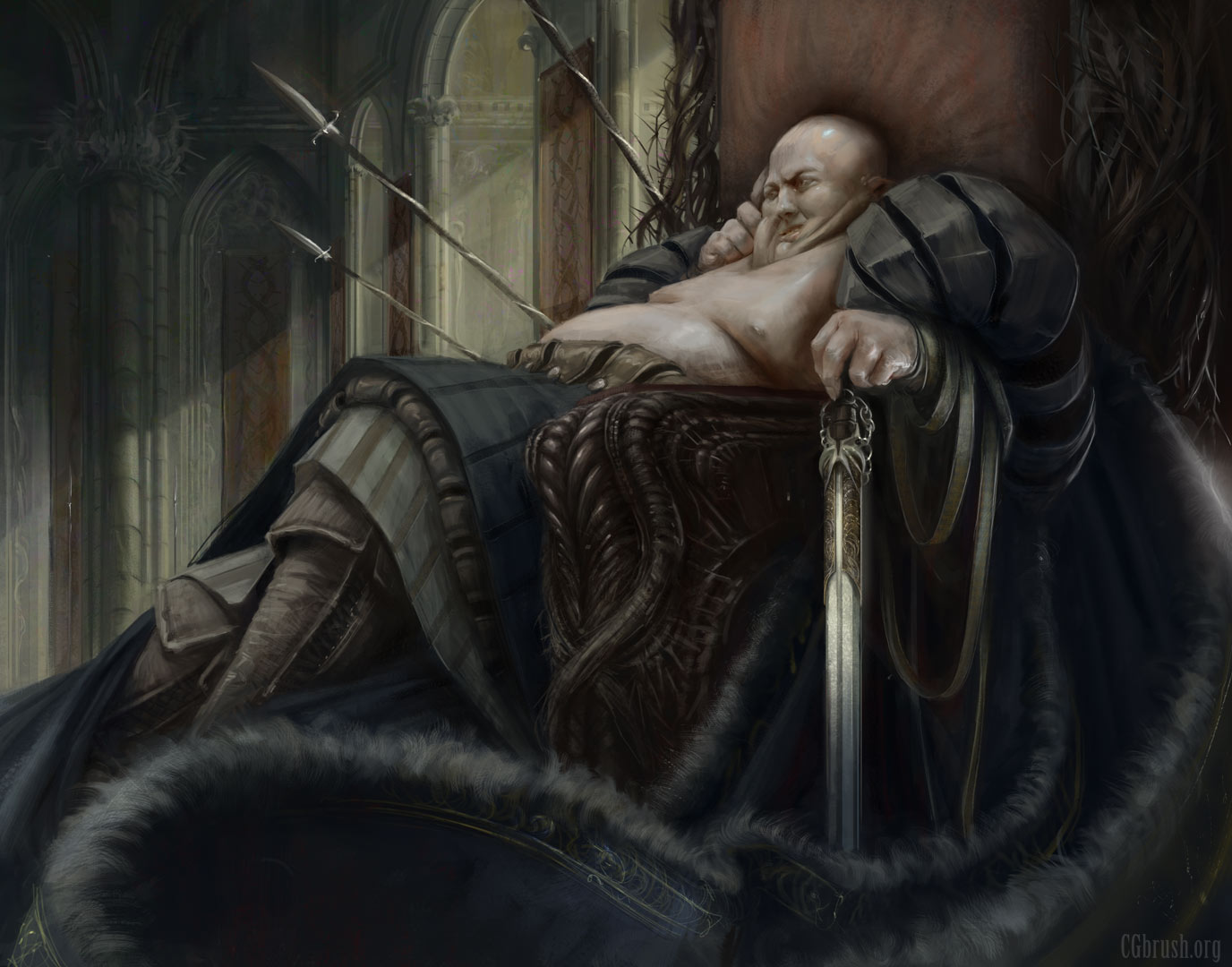
Hengksburg is ruled by Lord Mayor Rodyan, a corpulent shroud-eater who demands a toll in blood from every visiting merchant, from each serf on his land, and even from the lesser nobles who serve him. The Glutton’s appetite for gold and blood is exceeded only by his need or sexual release. To date, Rodyan has been married more than 300 times—some of his wives lacked the constitution to survive even a single night of Rodyan’s amorous advances—and the teenaged peasantry fear little more than to be selected.
Vallanoria
Vallanoria always retained close ties to Krakova to the north, and its citizens have never been as subdued and pliant as most of the living serfs of Morgau. However, the conquest of Krakova by the undead armies of the Principalities dealt a terrible blow to those who one day hoped to be liberated from their vampiric oppressors. Several past revolts were brutally quashed and as a result no one speaks of rebellion in Vallanoria these days, except among trusted friends. The baron has spies everywhere. Some think the crows all serve as his informants; others say the standing offer of 1,000 gp for the arrest of any rebel does his work for him.
~ Midgard Worldbook By Kobold Press
The city’s ruler is Baron Urslav, the Crawling Lord of Vallanoria, the Keeper of the Red Sisters. Urslav once made the grave mistake of offending Grandmother Baba Yaga and she responded by removing all his bones with her magic. As a result he spent a few weeks crawling on the floor of his palace before the terrible curse wore off, and the nickname stuck. He hates the nickname and despises Baba Yaga, spending much of his time plotting his revenge. To that end, he has become a champion of the Red Goddess Marena, giving generous endowments to her abbeys and paying for the construction of new temples. Each year at her festivals he brings both animals and serfs to her altars as sacrifices.
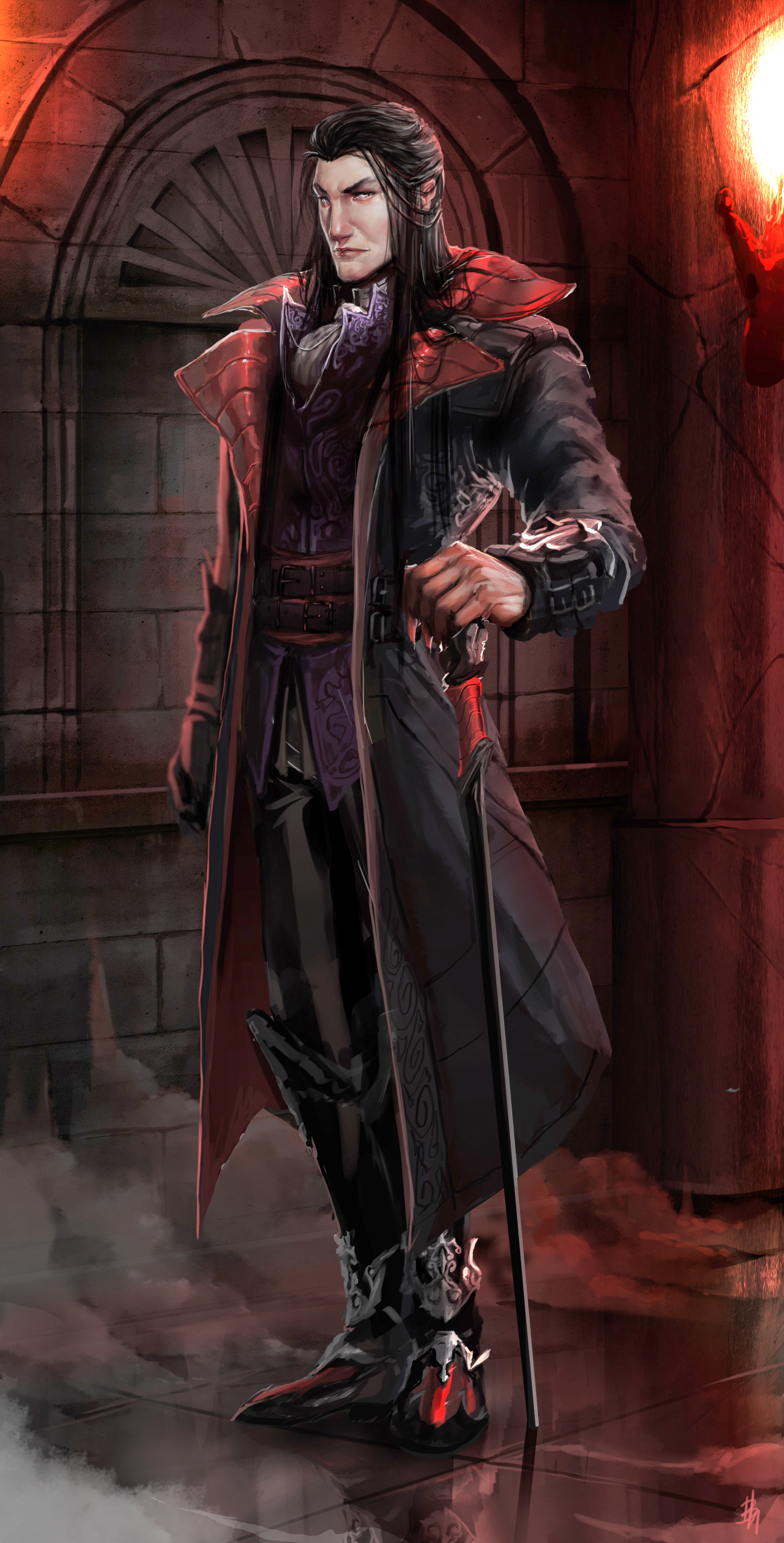
This military city [Vallanoria] is small but well organized. The Order of Grey Knights has a great commandery here, and the Temple of the Scourging Goddess is a center of the more warlike and flagellant priestesses of the Red Goddess. … Blood Priestess Sonye of the Spear, Wife to Slaughter, serves as the temple’s high priestess and leader of the warrior-priests of both deities. … The Temple of the Scourging Goddess honors Marena’s cult as an engine of mass slaughter; the lusts of soldiers are lusts for death and mayhem. Whetstones grind edges sharp in the outer portico, spears and swords are blessed by the priests of Mavros, and practice bouts in the courtyard often spill over to involve spectators and pilgrims. Those unfortunate enough to fall in these encounters are displayed skewered on the rusty iron spikes over the main gates. Sonye believes the slow drip-drip drip of their blood pleases the Red Goddess. She and her temple are best avoided.
~ Midgard Worldbook By Kobold Press

The beautiful palace of Vallanow serves as the venue for the Elders to celebrate Ghost Night and the start of winter in the presence of King Lucan and other dignitaries. The invitations to this debauch are highly sought after, at least by the undead. The stench of slaughter and decay brought to the palace by its guests makes the living nauseous for days. The festivities are organized and led now by Xanthus the Flenser, a high priest of Chernobog whose fondness for blood sacrifices at dawn is well known.
~ Midgard Worldbook By Kobold Press
The Ghost Night Ball is usually followed by a brutal round of executions, after the common folk attempt to rise against their masters. Each year, they would pray for a Krakovan army to arrive with the spring, but it never came. It certainly won’t now, though the most desperate still pin their hopes on a dwarven reaver army.

Wendestal Forest and the Stale Wood
Located in eastern Morgau, north of the Heartspire Road and west of the Cloudwall Mountains, Wendestal Forest is a dense greenwood composed of beech, pine, maple, and oak trees. Home to great numbers of wolves, boar, and deer, the forest provides good hunting for the local peasants and their vampire masters. The forest is under the jurisdiction of Lady Chesmaya, Voivodina of the Verdant Tower, a lich and powerful sorceress.
~ Midgard Worldbook By Kobold Press

Cloudwall Mountains
On the eastern upper reaches of Morgau lie the Cloudwall Mountains. The sharp, tall mountain peaks remain snow-covered throughout the year and their runoff gives impetus to the River Runnel. At the base of the mountains stands Cantri Abbey, home to the Blood Sisters of Marena. Overrun with Cloudwall leopards, two-headed Krakovan eagles, ogres, and yeti, the Cloudwall Mountains serve as the private hunting grounds of the King of the Blood Kingdom and his vampire coterie. Every living creature found there—including humans and dwarves—is subject to death by a variety of blood sports…
~ Midgard Worldbook By Kobold Press
Criminals are sometimes sentenced to exile in the Cloudwalls. Those who survive their trip over to the Rothenian Plain are granted their lives and freedom, but few ever make it that far.

Cantri Abbey
Resting in the foothills of the Cloudwalls, Cantri Abbey, also known as the Home Abbey of the Red Sisters, watches over pregnant women in the name of the Red Goddess Marena. Expectant mothers who are having a difficult pregnancy or are predicted to have complications with childbirth make a pilgrimage here to place themselves under the care of the Mother Abbess Calle of the Cradle, Daughter of Marena’s Brood. Calle and her priestesses look after these women in the wing of the abbey known as the Cradle, making sure no harm comes to them before, during, or after the birth. A stout, matronly figure with a forbidding stare, the Mother Abbess is invariably brusque with her underlings, but seems to enjoy making the odd quip—often somewhat unsettling in nature—to the women she looks after. Although she does her job well, Calle holds no genuine warmth toward either the mothers or their unborn babies. Instead, she sees the infants as mere consequences of lust kindled by the Red Goddess, destined to become cattle for Marena’s true chosen, the vampire lords of the Blood Kingdom.
~ Midgard Worldbook By Kobold Press
Men are forbidden from entering the walls of the Abbey, on pain of death. Trespassers are dealt with ruthlessly by the Mother Abbess—their drained corpses are hung in gibbets from the gatehouse as a warning to others. Occasionally, a vampire’s charred cadaver can be spotted in one of the cages. No men means no men.
King Lucan has assigned the abbey’s protection to Commander Baleneus, a powerful leader of the Ghost Knights. The Blood Sisters have yet to call upon him for aid, however. The Mother Abbess and her priestesses are more than capable of looking after themselves.

The Barany of Doresh
Grisal Marches
The western lands of the Barony of Doresh bordering the Ironcrag Mountains are known as the Grisal Marches, due to their proximity to the dwarven canton of that name. The Marches are dominated by the dense forest known to Doreshi as Walkers’ Wood, and to the Ironcrag dwarves as the Zombie Wood of Zwargau. Either way, the forest is aptly named: zombies and skeletons wander freely within its borders, animated by necromancers in the service of Lord Fandorin, Baron of Doresh and Fey Lord of the Grisal Marches.
~ Midgard Worldbook By Kobold Press
The forest’s western edges rise up into the hills and easternmost reaches of the mountains. These are held by the dwarves of Grisal, the Black Canton, who hate the undead and conduct frequent raids over the border to harass and destroy the Blood Kingdom’s soldiers. Baron Fandorin does his best to keep the raiders at bay, but he has too few troops to hold the mountains, and the dwarves remain too cautious to push far into the forest, lest their own fallen paladins and priests line up against them later as black-armored undead. The resulting stalemate has continued for generations, and so the Grisal Marches are constantly on a war footing.

Baron Fandorin is the only vampire of non-human origin among the shroud-eaters who governs lands of the Greater Duchy in King Lucan’s name. Once a shadow fey, his face and body are so shriveled and shrunken that it is almost impossible to make out his elven origins, although he still follows the Queen of Night and Magic. Fandorin has ruled the Barony of Doresh and safeguarded its borders for three centuries, ever since Lucan disposed of Doresh’s former ruler. He divides his time between Fandorin Keep and his underground sanctum, Whispergloom, located beneath Walkers’ Wood.
~ Midgard Worldbook By Kobold Press
Here, he has enslaved a number of Grisal dwarves, forcing them to manufacture dozens of fellforged into which the baron is intending to bind wraith-like deathwisps. With these formidable clockwork warriors in his army, Fandorin is hoping to break the long-running deadlock on the western front. The necrophagi of the Ghoul Imperium are regular visitors to the baron’s dungeon lair—a secret tunnel leads directly from there to the lands of the Empire. These darakhul study the arcane knowledge gathered in Fandorin’s impressive library in exchange for their recommendations for foul new necromantic experiments.
Fandorin Keep
The seat of the Baron of Doresh is situated high in the foothills of the Ironcrags, overlooking the Runnel valley below, with the boundary of Walkers’ Wood visible in the distance through the omnipresent fog. The castle is a beautiful yet foreboding building, with a tall, imposing central keep and towers topped with fairy-tale spires on each corner. The northwest tower, known as the Scholar’s Tower, contains an ancient portal leading to the famous Stross Library in Castle Shadowcrag, but alas, the ritual to open it has long been lost. To enter the castle, visitors must cross a narrow, 500-foot-long stone bridge above the icy, fast-flowing river nearly 200 feet below.
~ Midgard Worldbook By Kobold Press
Baron Fandorin lives in the keep with his wife, Baroness Mihaela, also once a Scathsidhe (shadow fey). Pale and beautiful with the large ears and wide mouth of her people, she gets very bored when her husband is away working in his laboratory for days at a time. Lady Mihaela enjoys the company of strapping, red-blooded young men and likes to have a fresh one sent up to the castle from the local villages for her amusement whenever she is home alone.

Commander Orkov watches over the southwest borders near Zobeck and the Ironcrags. She is responsible for the Temple of Aprostala, Commanderies of Walkers’ Wood, and Langrone. The commander wages a never‑ending war against the dwarves of Grisal and the other cantons. Her troops contain a much‑feared “dwarven company” of prisoners taken from Grisal and turned into undead.
~ Midgard Worldbook By Kobold Press

The Blood College of Doresh
This notorious college is led by the archlich Orgupash, one of the great allies of the vampire King Lucan of Morgau, and it exists to teach the control of wizardly and sorcerous power to the vampires, ghouls, and dhampir of Morgau and Doresh, … The vile lessons specialize in necromancy, divination, and enchantments, along with transmutation and evocation.

Temple of Aprostala
This great Temple of the Red Goddess stands at the eastern edge of Walkers’ Wood on the road between Bratislor and Hengksburg. Built from blood-red stone, the shrine of Aprostala is a site of pilgrimage for Marena’s faithful, and a place of gory daily sacrifices—pure white goats or calves are favored. Here, the dead serve the living: skeletons act as temple guards and zombies drag away the corpses of the sacrificial victims and carry ceramic pots filled with blood from the altar.
~ Midgard Worldbook By Kobold Press
Those who come here to pay homage are expected to display marks of devotion—shallow wounds or scars in their hands, cheeks, or shoulders. If these wounds can be reopened while kneeling at the Red Goddess’s altar, so much the better. High Priestess Lileshka of the Chalice, Mother of Lust, is Marena’s highest-ranking priestess and runs things at Aprostala. Sometimes the Red Goddess whispers to her, ordering her to seduce one or more of the pilgrims. Those men and women who willingly submit to her overtures are rewarded with an audience afterward to petition for the aid of the Red Goddess; those who rebuff Lileshka’s advances are handed over to the fanatics of the Order of Rosy Salvation. These zealous priestesses gladly break off from self-chastisement to turn their attentions and their scourges onto the pilgrims.


SITE NAVIGATION
Blog Site / Campaign Home Page
Setting & Lore / Scheduling & Play / Other Adventures
 Jötunhiemr